The efficacy profile of Lumvoa™ (veligrotug-vvze) in patients with chronic TED was established in the phase 3 THRIVE-2 clinical trial
Lumvoa demonstrated robust results across all endpoints in chronic TED.1,2
| Lumvoa | Placebo | P value | ||
|---|---|---|---|---|
| Proptosis | Responder rate, Week 15 | 57% | 8% | P<0.0001 |
| Mean reduction (CFB) | 2.4 mm | 0.5 mm | P<0.0001 | |
| Diplopia | Responder rate, Week 15 | 56% | 25% | P=0.0006 |
| Complete resolution rate, Week 15 | 32% | 14% | P=0.0156 | |
| Clinical activity score (CAS) reduction* | Disease inactivation (CAS reduced to 0 or 1)† | 55% | 24% | N/A |
| Mean reduction (CFB) | 3.0 | 1.2 | N/A | |
Predefined exploratory endpoints not adjusted for multiple comparison.2
†Analyses in the subpopulation of patients with CAS ≥3 at baseline.2
Rapid, strong, and durable reductions in proptosis1
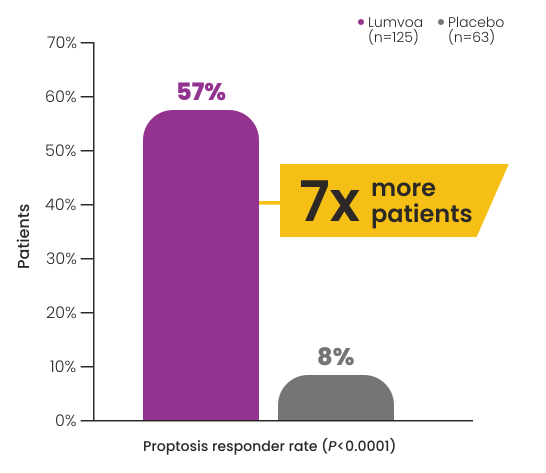
57% of patients had proptosis response at Week 151‡
‡Proptosis responder rate at Week 15 was defined as the percentage of patients with a ≥2-mm reduction in proptosis in the study eye from baseline, without deterioration in proptosis (≥2-mm increase) in the non-study eye.1
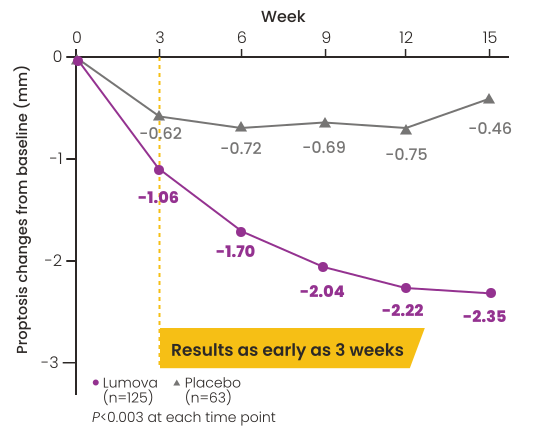
2.35 mm proptosis reduction at Week 151,2§
§Reduction in proptosis of 2 mm or greater was considered a clinically meaningful change.2
57% of Lumvoa patients who were proptosis responders at Week 15 maintained their response at Week 521
Diplopia improvement in the majority of patients and complete resolution in nearly one-third of patients1,3
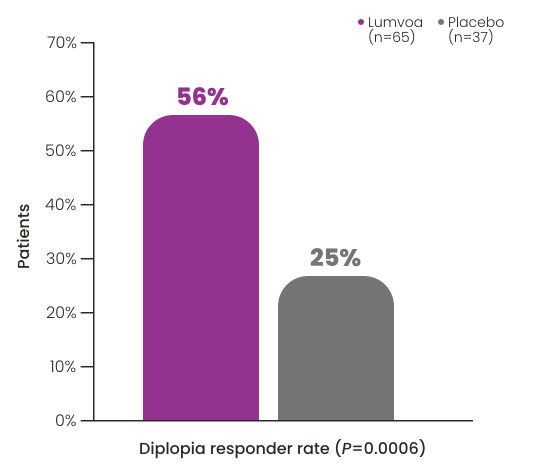
56% of patients had improvement in diplopia at Week 151‖
‖Diplopia response in a patient was defined as having a diplopia score of >0 at baseline and achieving a reduction of at least 1 point on the diplopia scale at Week 15.1
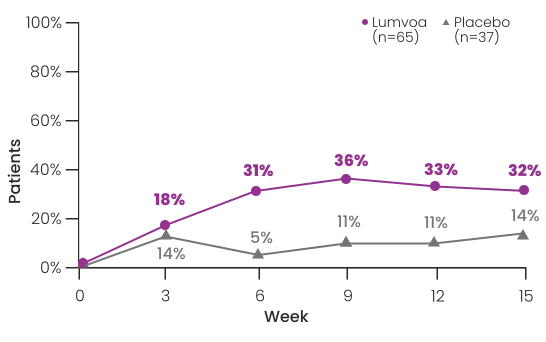
32% had complete resolution of diplopia—2x more than placebo3¶
¶Diplopia resolution in a patient was defined as having a diplopia score of >0 at baseline and a score of 0 at Week 15.1
80% of Lumvoa patients who achieved diplopia resolution at Week 15 maintained resolution through Week 521
CAS reduction in the majority of patients2#
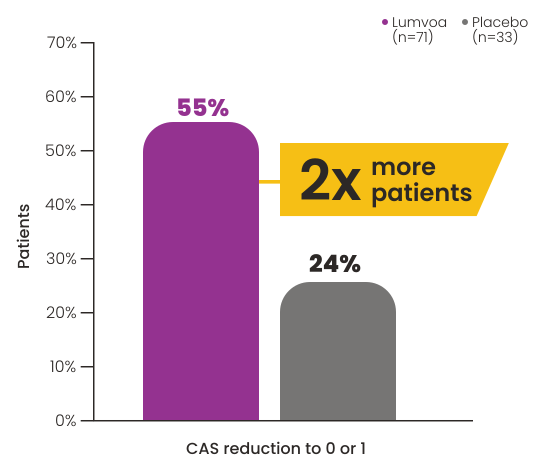
55% of patients had CAS reduced to 0 or 1 at Week 152
The CAS composite ranges from 0 to 7 and includes various types of pain and pressure, swelling or redness of eyelids, chemosis, inflammation of the caruncle or plica, proptosis, decrease in eye movement limit, and reduced visual acuity.4
#Analysis in the subpopulation of patients with CAS ≥3 at baseline.
Improvements across quality-of-life measures5**
This analysis was exploratory. The prespecified minimally important change from baseline is 8 points, which was considered the threshold for a clinically meaningful outcome.5
Overall quality of life5
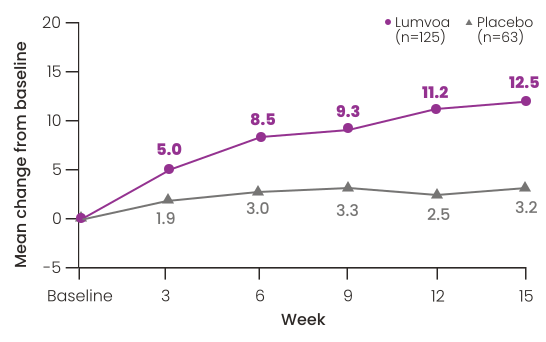
Overall quality of life is a composite of the results from the visual function and appearance subscales.6
The GO-QOL survey was not validated specifically for use in patients with TED.5
Visual function subscale5††
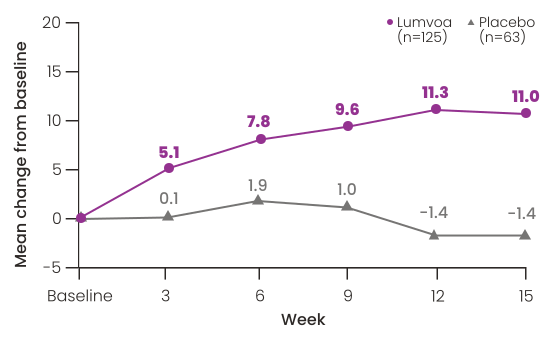
The visual functioning subscale assesses daily activities, such as driving and reading.6
Appearance subscale5††
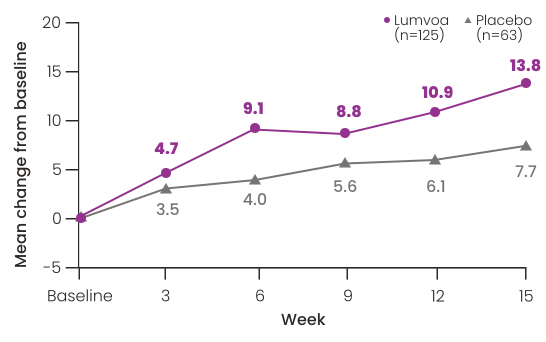
The appearance subscale addresses psycho-social parameters, such as social isolation and influence on friendships.6
**Results from the Graves Ophthalmopathy Quality of Life (GO-QOL) questionnaire. Overall combined score of the 2 subscales (visual function and appearance).5
††Results from the Graves Ophthalmopathy Quality of Life (GO-QOL) questionnaire. Analysis is exploratory and has not been adjusted for multiplicity. The minimal clinically important difference in quality of life has not been determined by these subscales.5